
Pinealon
EDR Peptide · Glu-Asp-Arg · Khavinson Tripeptide
Think of it as a brain's personal trainer.
Pinealon is like a personal trainer for your brain cells, helping them stay fit and resilient. Picture it as providing your neurons with a little extra support to handle stress, like an airbag for your brain during a bumpy cognitive ride.
This peptide seems to help brain cells survive and thrive, even when they're under pressure. In animal studies, Pinealon has shown potential in boosting memory and cognitive performance, especially in aging brains. It's suggested to work by tweaking how certain genes in the brain express themselves, possibly enhancing brain plasticity and reducing the signals that lead to cell death.
While most of the research comes from Russian studies, the idea is that Pinealon could offer some neuroprotective benefits, especially as we age. But remember, this is still largely an exploratory area of science, and human data outside of specific research groups is limited.
Who it's for
- Older adults curious about brain health support
- Biohackers interested in cognitive longevity
- People exploring ways to enhance mental resilience
Probably not for you if…
- Those looking for quick cognitive fixes
- Individuals wary of limited human research
- Anyone uncomfortable with exploratory science
Editorial summary for research context · Not medical advice
Mechanism of Action
Pinealon is a synthetic tripeptide (Glu-Asp-Arg) from the Khavinson short-peptide bioregulator program, designed based on the amino acid composition of pineal polypeptide fractions. Research suggests effects on neuronal survival under oxidative and hypoxic stress, modulation of gene expression in CNS tissue, and support of cognitive markers in aged rodent models. Russian clinical and preclinical literature positions it as a cognitive- and neuroprotective-oriented bioregulator. Human data outside the Khavinson group is very limited.
Researched Benefits
Neuroprotection under oxidative stress (preclinical)
Rodent and in vitro models of hypoxia and oxidative challenge report improved neuronal survival and reduced apoptosis markers.
- [Khavinson et al. 2011]
- [Arutjunyan et al. 2012]
Cognitive markers in aging
Aged rodent cognitive assays report improved performance in maze-based memory tasks versus control. Research suggests mechanisms involving modulation of CNS gene expression.
- [Kolchina et al. 2012]
CNS gene expression modulation
Preclinical research suggests upregulation of genes involved in neuronal plasticity and downregulation of pro-apoptotic signaling in aged CNS tissue.
Research Protocols
The following dosing ranges have appeared in published research protocols. Presented for informational purposes only, not a recommendation for human use.
Standard Khavinson research cycle
- Dosage
- 10 mg
- Frequency
- once daily
- Timing
- morning
- Cycle
- 2 weeks
Russian research protocols typically use 10-20 consecutive days of subcutaneous administration, 1-2 times per year. Morning timing is common given cognitive orientation.
Low-dose research
- Dosage
- 5 mg
- Frequency
- every other day
- Timing
- morning
- Cycle
- 4 weeks
Alternate-day lower-dose protocol used in longer research observations.
Reported Side Effects
- Injection-site irritation
- Mild headache on initiation reported anecdotally
- Long-term safety data outside Khavinson group publications is limited
Contraindications
- Pregnancy and lactation
- Active CNS malignancy
- Pediatric use
Stacking Partners
Peptides commonly paired with Pinealon in published research and protocol write-ups.
Vendor Pricing
Stacked earns a commission on purchases via these links. It does not influence our Trust Scores.
Top Videos
Curated from YouTube, refreshed weekly. Stacked doesn't host or endorse external content.
 15:58
15:58The Best Peptides for Longevity and Sleep (Human Studies)
Nick Norwitz MD PhD
213.2K views · 15:58 · 3 months ago
 11:01
11:01How Pinealon Might Improve Sleep & Cognitive Function | Dr. Abud Bakri & Dr. Andrew Huberman
Huberman Lab Clips
32.3K views · 11:01 · 4 months ago
 9:17
9:17Best Peptide for Sleep: DSIP vs Epithalon vs Pinealon
Dr. Greg Jones
11.6K views · 9:17 · 2 months ago
 4:12
4:12Pinealon The Most Underrated Peptide for Brain Power & Longevity 🧠
Biohacking xplained
9.4K views · 4:12 · 1 year ago
 7:43
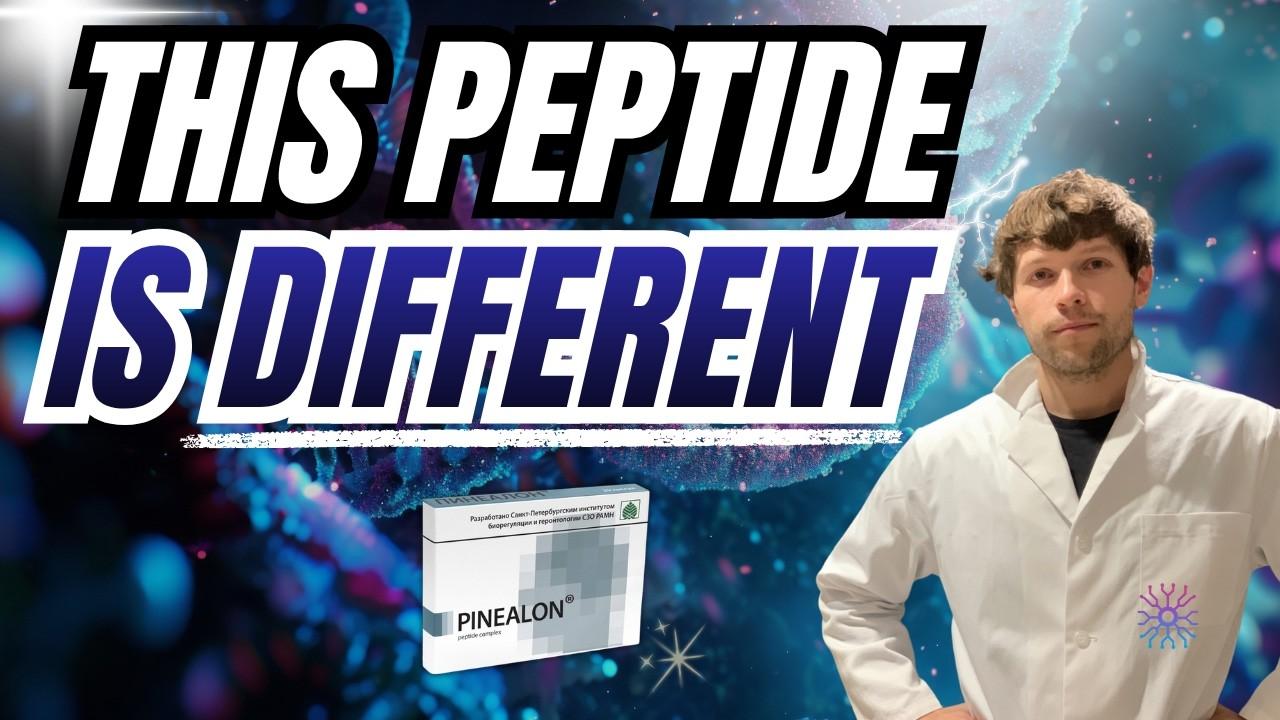
7:43Why Pinealon Deserves More Attention
Peptide Science Institute
6.4K views · 7:43 · 5 months ago
Research Papers
Neuroprotective effects of tripeptides on brain neurons under oxidative stress
Arutjunyan A, Kozina L, Milyutina Y, Korenevsky A, et al. · Bulletin of Experimental Biology and Medicine · 2012
Peptidergic regulation of cell aging and gene expression
Khavinson VKh, Kuznik BI, Ryzhak GA · Advances in Gerontology · 2012
Frequently Asked
- What is Pinealon?
- Pinealon is a longevity studied in laboratory research. This profile covers its researched mechanism of action, study context, reported side-effect profile, and current vendor pricing. For research purposes only; not medical advice.
- Is Pinealon legal to buy?
- Pinealon is sold strictly for laboratory and research use and is not approved by the FDA for human consumption. Legal status and import rules vary by country and are the buyer's responsibility.
- How much does Pinealon cost?
- Compare live $/mg, total price, stock, and each vendor's Stacked Score for Pinealon on its price page. Stacked does not sell peptides; it links out to vetted research vendors.