
GHK
Glycyl-L-histidyl-L-lysine · Gly-His-Lys · GHK (copper-free) · Tripeptide-1
Think of it as a gentle nudge for your skin's repair system.
GHK is a tiny protein fragment that naturally occurs in your body but tends to decline as you age. Picture it as a subtle whisper to your skin and tissues, encouraging them to keep up with their maintenance work. While it forms a powerful duo with copper to boost healing and rejuvenation, even on its own, GHK can still lend a helping hand by gently influencing collagen production.
Without copper, GHK's effects are more understated, like a soft background music rather than a full-blown orchestra. It's often used in research as a baseline to understand just how much copper adds to the mix. Even so, this little peptide can still play a role in keeping your skin and tissues in line, albeit in a quieter way.
Who it's for
- People curious about gentle skin and tissue support
- Those interested in anti-aging solutions without the big guns
- Individuals exploring natural compounds for skin care
Probably not for you if…
- Anyone looking for dramatic, overnight results
- People expecting a copper-like impact without the copper
- Those who prefer one-stop, all-in-one solutions
Editorial summary for research context · Not medical advice
Mechanism of Action
GHK is a naturally-occurring human tripeptide (Gly-His-Lys) present in plasma, saliva, and urine, with levels that decline substantially with age. GHK has a high intrinsic affinity for copper(II) and forms the GHK-Cu complex, which is the form responsible for the majority of the regenerative and gene-modulating activities described in the literature. GHK in its copper-free (basic) form is often used as a research baseline or comparator to GHK-Cu; on its own it has more modest activity and is studied to isolate the contribution of the copper ion. Research suggests even copper-free GHK can influence collagen-metabolism gene expression, but most skin, hair, and wound-healing endpoints are dominated by the GHK-Cu complex.
Researched Benefits
Collagen-gene modulation (research baseline)
Gene-expression studies suggest GHK influences collagen- and extracellular-matrix-related transcripts, though effects are consistently smaller than those observed with GHK-Cu.
- [Pickart & Margolina 2018]
Copper-binding research
In-vitro work characterizes the GHK-Cu(II) binding stoichiometry and stability constants that underlie the pharmacology of the copper-bound form.
- [Pickart et al. 2015]
Antioxidant activity (modest)
Cell-based assays indicate modest free-radical-scavenging activity, enhanced substantially upon copper binding.
Research Protocols
The following dosing ranges have appeared in published research protocols. Presented for informational purposes only, not a recommendation for human use.
Research baseline (cosmetic comparator)
- Dosage
- 2 mg
- Frequency
- daily
- Timing
- evening
- Cycle
- 8 weeks
Used primarily as a comparator alongside GHK-Cu in research contexts to isolate copper-dependent vs copper-independent effects. In most practical research settings, GHK-Cu is preferred.
Topical research
- Dosage
- 3 mg
- Frequency
- twice daily
- Timing
- morning and evening
- Cycle
- 12 weeks
Compounded topical formulations have been used in cosmetic research. Effect size is typically smaller than matched GHK-Cu formulations.
Reported Side Effects
- Generally well tolerated in preclinical and cosmetic research
- Mild localized erythema with topical application
- Rare injection-site reactions
- Without bound copper, clinical effect is modest, research baseline rather than first-line
Contraindications
- Pregnancy and lactation (no safety data)
- Active malignancy (conservative precaution shared with GHK-Cu)
- Known hypersensitivity to the peptide
Stacking Partners
Peptides commonly paired with GHK in published research and protocol write-ups.
Vendor Pricing
Stacked earns a commission on purchases via these links. It does not influence our Trust Scores.
Gear + Companions
Reconstitution supplies and research-backed supplement companions for GHK. Editorial picks only, we earn a commission through Amazon on the click, no sponsorship.
Gear you'll need
· Reconstitution + storage essentialsBacteriostatic Water 30mL (0.9% Benzyl Alcohol)
Empower Pharmacy / generic medical supply
Reconstitutes every lyophilized peptide. 28-day viability refrigerated.
Insulin Syringes 31G × 5/16" × 0.5mL (100 count)
EasyTouch
31G × 0.5mL insulin syringes — the default size for sub-0.25mL peptide doses.
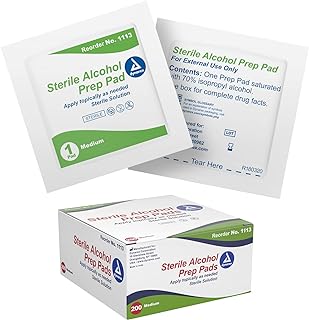
Alcohol Prep Pads (Sterile, 200 count)
Dynarex
Sterile 70% IPA prep pads — one per vial stopper + one per injection site.
1-Quart Sharps Disposal Container
BD / Becton Dickinson
FDA-cleared sharps container — pharmacies won't accept improvised disposal.


Stacks well with
· Supplement companions, independent evidence, not sponsoredGranactive Retinoid 2% Emulsion (30mL)
The Ordinary
Modern retinoid pairs safely with copper-peptide topicals on alternating evenings — tretinoin-grade collagen stimulation without the irritation profile.

As an Amazon Associate we earn from qualifying purchases · Disclosed per FTC guidelines
Top Videos
Curated from YouTube, refreshed weekly. Stacked doesn't host or endorse external content.
 16:29
16:29Are Copper Peptides Worth the Hype? | Doctorly Reviews
Doctorly
787K views · 16:29 · 4 years ago
 7:21
7:21I ran GHK-Cu for 12 months so you don’t have to (here are the results)
Nicholas Trigili | Human Performance Specialist
451.7K views · 7:21 · 6 months ago
 9:25
9:25Dr. Admits - I Was WRONG AGAIN About GHK-Cu
This Is Not Covered - Dr. Ashley Froese
384.5K views · 9:25 · 5 months ago
 4:22
4:22All About GHK-Cu Peptide | More Than Just Cosmetic
Black Stone Physical Medicine
293.6K views · 4:22 · 3 years ago
 19:56
19:56Doctor Reveals The ONLY Peptide That Builds Collagen, Muscle & Hair (GHK CU)
Dr. Jones, DC
285.8K views · 19:56 · 10 months ago
Research Papers
The human tripeptide GHK and tissue remodeling
Pickart L, Vasquez-Soltero JM, Margolina A · Journal of Aging Research · 2015
PubMed 26064676 →Regenerative and Protective Actions of the GHK-Cu Peptide in the Light of the New Gene Data
Pickart L, Margolina A · International Journal of Molecular Sciences · 2018
PubMed 29986520 →
Frequently Asked
- What is GHK?
- GHK is a healing & recovery studied in laboratory research. This profile covers its researched mechanism of action, study context, reported side-effect profile, and current vendor pricing. For research purposes only; not medical advice.
- Is GHK legal to buy?
- GHK is sold strictly for laboratory and research use and is not approved by the FDA for human consumption. Legal status and import rules vary by country and are the buyer's responsibility.
- How much does GHK cost?
- Compare live $/mg, total price, stock, and each vendor's Stacked Score for GHK on its price page. Stacked does not sell peptides; it links out to vetted research vendors.